Pixel 10 & Pixel 9 share many similarities, but there are also important differences, such as quality, performance, features, design, and connectivity. If you want the best one between them, I Would recommend the Pixel 10 rather than the Pixel 9. 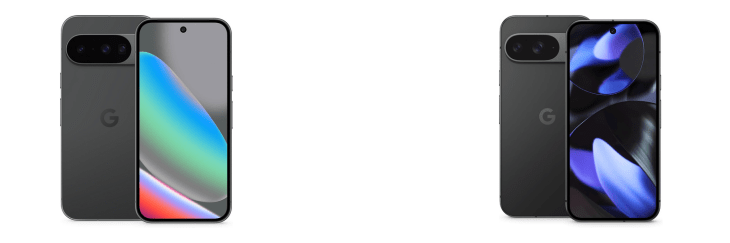
Why Do I Recommend The Pixel 10?
- The Pixel 10 features the Tensor G5 processor for faster AI-driven performance, improved efficiency, and smoother multitasking, while the Pixel 9 uses the older Tensor G4 chip.
- Pixel 10 includes a 6.3-inch LTPO OLED display for a more adaptive 1–120Hz refresh rate and fluid visual experience, whereas the Pixel 9 has a 6.2-inch OLED display limited to a 60–120Hz range.
- It comes with a newer Samsung GN2 50MP main camera sensor for better light capture and sharper low-light photos, while the Pixel 9 uses the older GN1 sensor.
- The Pixel 10 features 12GB LPDDR5X RAM for faster app loading and improved multitasking stability, compared to the Pixel 9’s 8GB LPDDR5 RAM.
- Pixel 10 supports 8K 30fps video recording for ultra-detailed footage suitable for editing and large displays, whereas the Pixel 9 is limited to 4K 60fps recording.
- It includes Wi-Fi 7 connectivity for faster, lower-latency wireless performance, while the Pixel 9 supports Wi-Fi 6E.
- The Pixel 10 supports 35W wired and 18W wireless charging for quicker power replenishment, compared to the Pixel 9’s 30W wired and 15W wireless speeds.
- Pixel 10 guarantees 7 years of OS and security updates for longer software reliability and future-proofing, whereas the Pixel 9 provides only 5 years of support.
Maybe the Pixel 9 can make you comfortable because it’s a little bit cheaper than the Pixel 10. But you have to compromise all the above-mentioned features. Now the Decision is Yours. I hope it was helpful to choose the right one.
Side-by-Side Comparison
| Feature | Pixel 10 | Pixel 9 |
| Processor | Tensor G5 | Tensor G4 |
| GPU | Immortalis-G720 | Mali-G715 |
| Display Type | LTPO OLED | OLED |
| Display Size | 6.3-inch | 6.2-inch |
| Refresh Rate | 1–120Hz adaptive | 60–120Hz adaptive |
| Peak Brightness | 2400 nits | 2000 nits |
| Frame Material | Polished aluminum | Matte aluminum |
| Back Finish | Satin glass | Glossy glass |
| Front Protection | Gorilla Glass Victus 3 | Gorilla Glass Victus 2 |
| RAM | 12GB LPDDR5X | 8GB LPDDR5 |
| Storage Type | UFS 4.0 | UFS 3.1 |
| Storage Options | 128GB / 256GB / 512GB | 128GB / 256GB |
| Main Camera Sensor | 50MP Samsung GN2 | 50MP Samsung GN1 |
| Ultra-Wide Camera | 12MP f/1.8 | 12MP f/2.2 |
| Front Camera | 10.5MP f/1.8 | 10.5MP f/2.0 |
| Video Recording | 8K 30fps / 4K 60fps | 4K 60fps |
| Battery Capacity | 4750mAh | 4575mAh |
| Wired Charging | 35W | 30W |
| Wireless Charging | 18W | 15W |
| Connectivity | Wi-Fi 7 | Wi-Fi 6E |
| Bluetooth | Version 5.4 | Version 5.3 |
| AI Engine | Gemini Nano | Assistant |
| Security Chip | Titan M3 | Titan M2 |
| OS | Android 15 | Android 14 |
| Software Support | 7 years | 5 years |
| Weight | 189g | 187g |
| Colors | Obsidian, Porcelain, Bay | Obsidian, Hazel, Rose |
| Price | Check Pixel 10 Price | Check Pixel 9 Price |
What Common Both Can Do?
- Display Technology: Both Pixel 10 and Pixel 9 use OLED panels, which provide deep blacks, vibrant colors, and excellent contrast for immersive viewing and battery efficiency. OLED technology also supports thinner designs and better power management for everyday use.
- HDR Support: Each phone supports HDR10+, ensuring enhanced dynamic range and color accuracy when watching compatible content. This makes streaming and photo viewing more visually rich and detailed.
- Always-On Display: Both models feature an always-on display that shows essential information such as time, notifications, and battery level without unlocking the phone. This improves convenience and reduces the need to wake the screen repeatedly.
- Main Camera Resolution: Pixel 10 and Pixel 9 share the same 50MP resolution on the main camera, allowing detailed and sharp image capture. The high megapixel count supports excellent image clarity in both daylight and low-light situations.
- Optical Image Stabilization: Both devices include OIS, reducing motion blur and shakiness in photos and videos. This feature ensures clear results even when shooting handheld or in challenging lighting.
- Ultra-Wide Camera: Each phone includes a 12MP ultra-wide sensor that enables wide field-of-view shots for landscapes, architecture, and group photos. The consistency in this lens type maintains a versatile shooting experience.
- Front Camera Megapixels: Both models use a 10.5MP front camera that delivers sharp selfies and supports high-quality video calls. The consistent resolution ensures similar performance across communication and content creation.
- Night Sight Mode: Each phone includes Google’s Night Sight mode for low-light photography. This shared software feature enhances brightness and detail in dark environments without using a flash.
- Fingerprint Sensor (Under Display): Each phone has an under-display fingerprint sensor for secure and fast authentication. This consistent biometric approach maintains ease of access while keeping the design clean.
- Face Unlock: Both phones include face unlock as an additional biometric method. This allows quick and convenient unlocking without touching the screen.
- 5G Connectivity: Each supports 5G networks, ensuring fast download and upload speeds for streaming, gaming, and browsing. The shared modem capability delivers reliable next-generation mobile performance.
- Dual SIM (eSIM + Nano): Both phones allow users to manage two numbers or carriers simultaneously through eSIM and a physical SIM slot. This is beneficial for travel or separating personal and work lines.
- USB Type-C: Each phone uses USB Type-C for charging and data transfer, ensuring universal compatibility and faster connection speeds. The consistent port also simplifies accessory use.
- Wireless Charging Support: Both support Qi wireless charging, allowing convenient cable-free charging. This feature is ideal for modern charging pads and multi-device setups.
- Reverse Wireless Charging: Each model supports battery share functionality, letting users charge compatible devices like earbuds or smartwatches on the phone’s back. It enhances utility during travel or emergencies.
- Titan Security Chip: Both include Google’s Titan security hardware for safeguarding sensitive data and encryption keys. This ensures a secure environment for personal and financial information on both models.
Common Features
| Feature | Pixel 10 | Pixel 9 |
| Display Technology | OLED | OLED |
| HDR Support | HDR10+ | HDR10+ |
| Always-On Display | Yes | Yes |
| Main Camera Resolution | 50MP | 50MP |
| Optical Image Stabilization | Yes | Yes |
| Ultra-Wide Camera | 12MP | 12MP |
| Front Camera Megapixels | 10.5MP | 10.5MP |
| Night Sight Mode | Yes | Yes |
| Portrait Mode | Yes | Yes |
| 4K Video Recording | Yes | Yes |
| Stereo Speakers | Yes | Yes |
| IP68 Water Resistance | Yes | Yes |
| Fingerprint Sensor (Under Display) | Yes | Yes |
| Face Unlock | Yes | Yes |
| 5G Connectivity | Yes | Yes |
| Dual SIM (eSIM + Nano) | Yes | Yes |
| USB Type-C | Yes | Yes |
| Wireless Charging Support | Yes | Yes |
| Reverse Wireless Charging | Yes | Yes |
| Titan Security Chip | Yes | Yes |
| Price | Check Pixel 10 Price | Check Pixel 9 Price |
FAQ
Does the Pixel 10 have a better processor than the Pixel 9? Are the displays on the Pixel 10 and Pixel 9 the same size? Do both phones have the same camera resolution? Is there any difference in the ultra-wide camera between the two models? Does the Pixel 10 support 8K video recording? How do the batteries compare between the Pixel 10 and Pixel 9? What are the charging speeds on both phones? Do both phones have water and dust resistance? Is the design different between the Pixel 10 and Pixel 9? Do both phones support 5G connectivity? What’s new in software support for the Pixel 10? Are there any changes in AI features between Pixel 10 and Pixel 9? Do both phones have the same biometric options? Is there a difference in wireless connectivity between the two models? Which phone is better for long-term use? |