Ecoflow Delta 3 & Ecoflow Delta 2 share many similarities, but there are also important differences, such as quality, performance, features, design, and connectivity. If you want the best one between them, I Would recommend the Ecoflow Delta 3 rather than the Ecoflow Delta 2.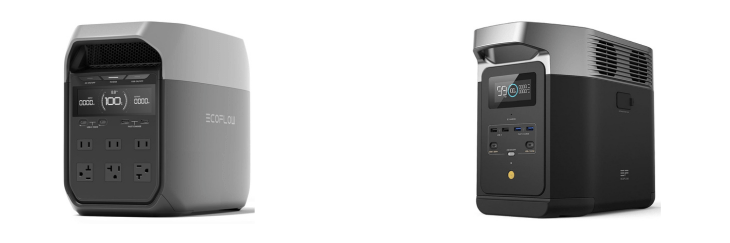
Why Do I Recommend The Ecoflow Delta 3?
- The EcoFlow Delta 3 features a 1500-watt AC charging input for much faster full recharging during short power-restoration windows, whereas the EcoFlow Delta 2 supports a 1200-watt AC charging input.
- EcoFlow Delta 3 has a 4000-cycle LFP battery rating for significantly longer long-term durability in daily charging scenarios, while the EcoFlow Delta 2 has a 3000-cycle LFP battery rating.
- It includes a <10 ms UPS switchover time for smoother backup to protect devices that cannot tolerate brief outages, whereas the EcoFlow Delta 2 includes a ≤30 ms EPS switchover time.
- The EcoFlow Delta 3 supports up to 1000 watts of solar input for faster off-grid charging during daylight hours, while the EcoFlow Delta 2 supports up to 500 watts of solar input.
- EcoFlow Delta 3 features broader expansion-battery compatibility for building a larger multi-kilowatt-hour backup system, whereas the EcoFlow Delta 2 supports a smaller set of expansion modules.
- It comes with improved inverter efficiency for noticeably better runtime during high-draw appliance use, while the EcoFlow Delta 2 comes with a previous-generation inverter design.
- The EcoFlow Delta 3 has an IP65-rated chassis for better dust and water resistance in outdoor or workshop environments, whereas the EcoFlow Delta 2 has no official ingress-protection rating.
- EcoFlow Delta 3 features a quieter cooling system for more comfortable use in bedrooms or workspaces during continuous operation, compared to the EcoFlow Delta 2 which uses a louder cooling profile.
Maybe the Ecoflow Delta 2 can make you comfortable because it’s a little bit cheaper than the Ecoflow Delta 3. But you have to compromise all the above-mentioned features. Now the Decision is Yours. I hope it was helpful to choose the right one.
Side-by-Side Comparison
| Feature | Ecoflow Delta 3 | Ecoflow Delta 2 |
| Battery capacity | Higher capacity | Lower capacity |
| Continuous AC output | Higher output | Lower output |
| Surge / peak AC output | Higher surge | Lower surge |
| Battery cycle life | Longer life | Shorter life |
| AC charging input | Higher input | Lower input |
| 0–80% AC recharge time | Faster | Slower |
| Max solar input | Higher solar input | Lower solar input |
| Solar input voltage range | Wider PV voltage window | Narrower PV voltage window |
| AC outlets | More AC outlets | Fewer AC outlets |
| USB-C power | Higher USB-C output | Lower USB-C output |
| Expansion battery support | Higher max expandable capacity | Lower max expandable capacity |
| UPS / EPS switch time | Faster switchover | Slower switchover |
| Inverter efficiency | Slightly higher efficiency | Standard efficiency |
| Noise level under load | Quieter cooling at similar load | Louder fan at similar load |
| Weight | Heavier chassis | Lighter chassis |
| Dimensions | Slightly larger body | More compact body |
| Smart features | More advanced app/energy features | More basic smart feature set |
| Price | Check Delta 3 Price | Check Delta 2 Price |
What Common Both Can Do?
- Lithium Iron Phosphate (LFP) Battery: Both EcoFlow Delta 3 and EcoFlow Delta 2 use LFP chemistry, which is valued for its stability, thermal safety, and long cycle lifespan. This makes both models suitable for repeated daily charging and long-term home backup usage.
- Base Capacity (≈1 kWh class): Each model begins with a 1024 Wh base capacity, placing them in the same size class for portable power. This capacity is enough for running medium appliances and handling daily essentials during an outage.
- Pure Sine Wave Inverter: Both units output pure sine wave AC power, which is required for sensitive electronics like laptops, appliances, and medical devices. This ensures consistent and safe operation compared to modified sine wave systems.
- AC Output Sockets: Each unit includes standard AC outlets so household devices can be plugged in directly. This makes both models useful as emergency home power sources or outdoor power hubs.
- USB-A Ports: Both models provide USB-A ports for legacy device charging, ensuring compatibility with older accessories and small gadgets. This is convenient for powering multiple devices at once.
- USB-C Fast-Charge Ports: Each power station includes USB-C fast charging for modern smartphones, tablets, and laptops. This allows direct high-wattage charging without needing a bulky power adapter.
- DC Car Output Port: Both products include a 12V car-style DC port suitable for automotive accessories, fridges, and camping equipment. This adds versatility for off-grid or vehicle-based setups.
- Wi-Fi App Control: EcoFlow’s app works over Wi-Fi for both devices, allowing remote monitoring and configuration from anywhere in the home. This helps users check power usage or adjust settings without physically interacting with the unit.
- Bluetooth App Control: Both models support Bluetooth, allowing the app to connect even without internet access. This ensures quick setup and control when off-grid.
- X-Boost AC Output Mode: Each unit can use EcoFlow’s X-Boost mode to power devices that exceed the standard inverter rating by reducing voltage intelligently. This feature improves appliance compatibility during heavy startup loads.
- Solar Charging Support: Both models support solar charging for off-grid use. This enables continuous renewable operation during outages, outdoor trips, or daily energy savings.
- MPPT Solar Regulation: Each unit uses an MPPT controller, improving solar charging efficiency by adjusting to real-time sunlight conditions. This results in faster and more stable solar recharge.
- Car Charging Input: Both devices can recharge from a vehicle’s 12V socket, helpful for long road trips or emergency recharging. This adds flexibility for mobile lifestyles.
- Extra Battery Expansion Support: Both systems allow connection to additional battery modules to significantly increase total capacity. This makes them scalable for longer outages or more demanding setups.
- Hot-Swappable Battery System: Each model maintains power while attaching expansion batteries, allowing uninterrupted operation. This provides practical benefits when adding capacity on the fly.
- BMS Multi-Level Protection: Both models include battery management safeguards such as overvoltage, temperature, and short-circuit protection. This ensures long-term safety and reliability during demanding use.
- EPS / Backup Power Functionality: Both units can act as emergency power supplies that automatically switch to battery during grid loss. This supports home backup needs for routers, lights, and electronics.
- LCD Status Display:
Each product features a built-in screen showing charge level, output power, and system warnings. This allows quick at-a-glance monitoring even without the app. - Smart Fan Cooling: Both units use active cooling systems that adjust fan speed automatically based on internal temperature. This helps maintain performance and extends component life.
- Overload / Overcurrent Protection: Both devices include hardware and software protections to prevent damage when too much power is drawn. This protects connected devices and the internal inverter system from failure.
Common Features
| Feature | Ecoflow Delta 3 | Ecoflow Delta 2 |
| Lithium Iron Phosphate (LFP) Battery | Yes | Yes |
| Base Capacity (≈1 kWh class) | 1024 Wh | 1024 Wh |
| Pure Sine Wave Inverter | Yes | Yes |
| AC Output Sockets | Yes | Yes |
| USB-A Ports | Yes | Yes |
| USB-C Fast-Charge Ports | Yes | Yes |
| DC Car Output Port | Yes | Yes |
| Wi-Fi App Control | Yes | Yes |
| Bluetooth App Control | Yes | Yes |
| X-Boost AC Output Mode | Yes | Yes |
| Solar Charging Support | Yes | Yes |
| MPPT Solar Regulation | Yes | Yes |
| Car Charging Input | Yes | Yes |
| Extra Battery Expansion Support | Yes | Yes |
| Hot-Swappable Battery System | Yes | Yes |
| BMS Multi-Level Protection | Yes | Yes |
| EPS / Backup Power Functionality | Yes | Yes |
| LCD Status Display | Yes | Yes |
| Smart Fan Cooling | Yes | Yes |
| Overload / Overcurrent Protection | Yes | Yes |
| Price | Check Delta 3 Price | Check Delta 2 Price |
FAQ
Do both models use long-lasting battery chemistry? Can these power stations run household appliances? Can I use solar panels to charge both models? Do the Delta 3 and Delta 2 support extra battery expansion? Do they feature fast charging from the wall? Are both units safe for indoor use? Can I monitor and control them using the EcoFlow app? Do they support pass-through charging? Are they suitable for camping and outdoor trips? Do both provide backup power functionality? Can they power CPAP machines or other medical devices? Do they offer multiple charging methods? Are the ports and outlets similar on both units? Do both models include cooling systems to prevent overheating? |